

Does your hair look fresh in the morning but feel greasy by the afternoon? Do your roots become flat, heavy, or shiny even when your ends still feel dry? You are not alone. Many people search for answers to the same question: why does my scalp get oily so fast?
The truth is, an oily scalp is not always caused by “dirty hair.” Your scalp naturally produces sebum, an oil that helps protect the skin and hair. But when oil, sweat, product buildup, and daily styling habits collect around the roots, your hair can start to look greasy faster than expected.
The good news: you do not always need to wash your hair more often. In many cases, a smarter oily scalp care routine at home can help your roots feel fresher, your hair look lighter, and your style last longer between wash days.
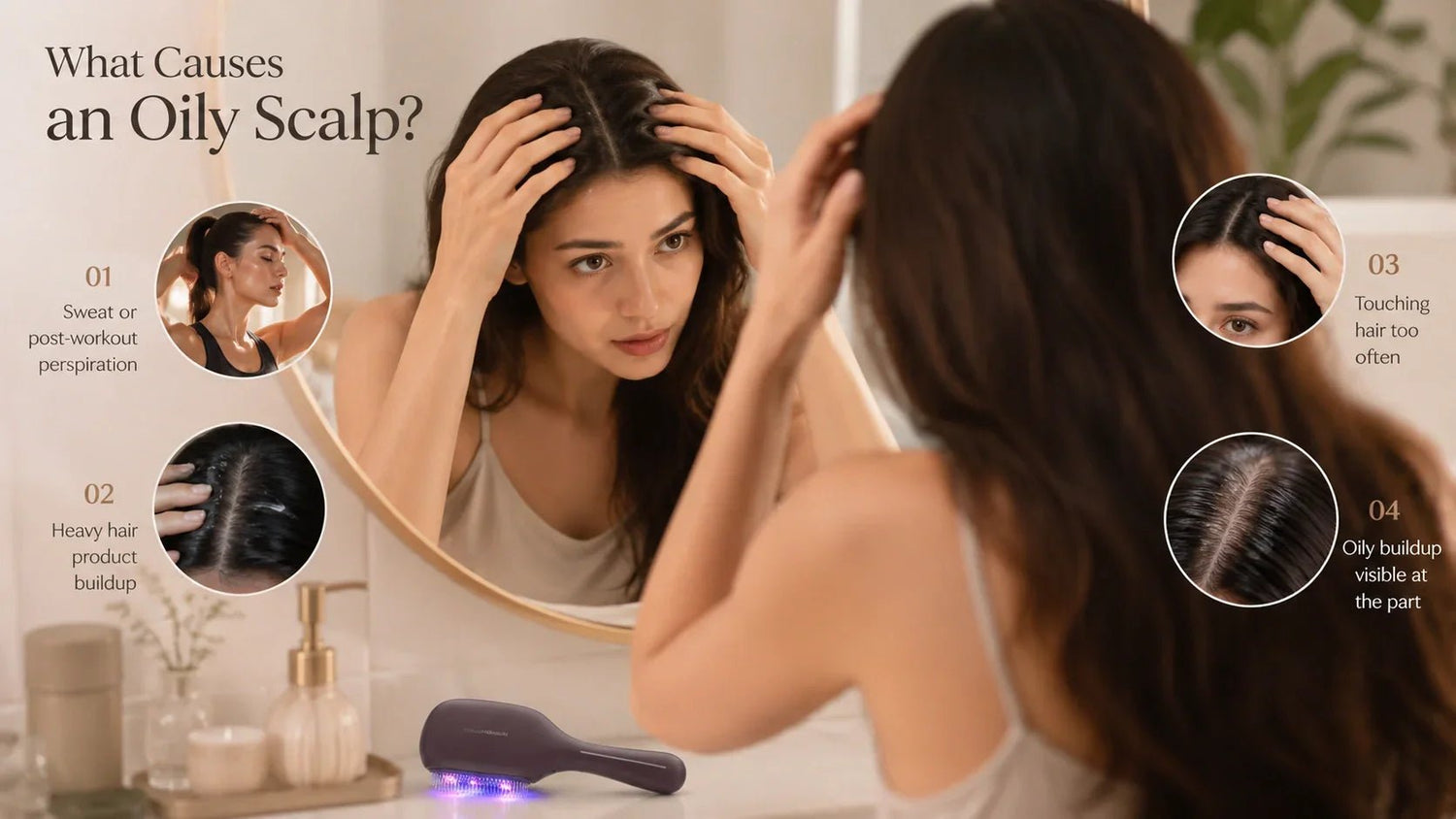
What Causes an Oily Scalp?
Your scalp has oil glands, just like the skin on your face. These glands produce sebum to keep the scalp comfortable and the hair shaft protected. However, several factors can make your scalp feel oily faster.
Common causes of oily roots include:
- Overwashing or harsh cleansing
- Heavy conditioners applied too close to the scalp
- Product buildup from dry shampoo, oils, gels, or styling sprays
- Touching your hair too often during the day
- Sweat from workouts, hot weather, or humidity
- Fine hair texture that shows oil more quickly
- Hormonal changes or stress
- Not cleansing the scalp thoroughly enough
The goal is not to remove every drop of oil. The goal is to keep the scalp feeling balanced, clean, and comfortable.
If your scalp is oily but your ends are dry, your routine may need better balance. Your roots need freshness, while your lengths need softness and protection.

Why Do My Roots Get Greasy So Quickly?
Greasy roots often happen because oil sits close to the scalp and spreads through the hair near the root area. This is especially noticeable if you have fine, straight, or low-volume hair. The oil can make the roots look flat and heavy even when the rest of your hair still feels clean.
Another common reason is product layering. Dry shampoo, leave-in treatments, hair oils, and styling sprays may help your hair look good in the moment, but they can also create buildup if they are not washed out properly.
That is why a good scalp care routine for oily roots should focus on the scalp itself, not just the hair strands.
For a complete foundation, you can also read our guide to a complete scalp care routine at home.
Oily Scalp vs. Dirty Hair: What’s the Difference?
Oily scalp and dirty hair are not exactly the same thing.
Your scalp can feel oily because of natural sebum production, while your hair can feel dirty because of buildup, sweat, pollution, or styling products. This is why some people wash their hair often but still feel like their roots get greasy quickly.
If your hair gets oily fast after washing, the issue may be your scalp routine — not just your shampoo.
A better routine should include gentle cleansing, careful product placement, and targeted scalp care between wash days.

Daily Habits That Can Make Oily Roots Worse
Small habits can make a big difference. If your scalp gets oily quickly, check whether any of these are part of your routine.
Applying conditioner to the roots
Conditioner is usually best for the mid-lengths and ends. Applying it directly to the scalp can make roots feel heavier.
Using too much dry shampoo
Dry shampoo can absorb oil temporarily, but too much can create buildup and make the scalp feel clogged or uncomfortable.
Touching your hair often
Hands carry oil and residue. Constantly touching, flipping, or fixing your hair can make roots look greasy faster.
Brushing only the ends
Many people brush their hair but ignore the scalp. A scalp-focused brushing routine can help make hair care feel more complete.
Using hot water every wash
Very hot water may leave the scalp feeling uncomfortable or unbalanced. Lukewarm water is usually a better choice for daily hair care.

How to Build an At-Home Routine for Oily Scalp
A strong at-home scalp care routine for oily hair does not need to be complicated. The key is choosing steps that are easy to repeat.
Step 1: Cleanse the Scalp, Not Just the Hair
When shampooing, focus on your scalp and roots. Massage gently with your fingertips and let the foam move through the lengths as you rinse.
Avoid scrubbing too aggressively. Your scalp is skin, and harsh friction can make it feel irritated.
Step 2: Keep Conditioner Away from the Roots
If your roots get oily fast, apply conditioner from the mid-lengths to the ends only. This helps keep the top of your hair lighter while still caring for dry ends.
Step 3: Refresh Roots Without Overwashing
Between wash days, avoid adding too many heavy products. Instead, focus on simple habits: brush slowly, keep the scalp comfortable, and avoid touching the hair too often.
For people searching for how to refresh oily roots without washing, the answer is not always more product. Sometimes, a cleaner and more intentional scalp routine works better.
Step 4: Add a Scalp Care Tool
A regular brush can detangle, but it does not do much for the scalp. A scalp-focused beauty device can make your daily routine feel more targeted.
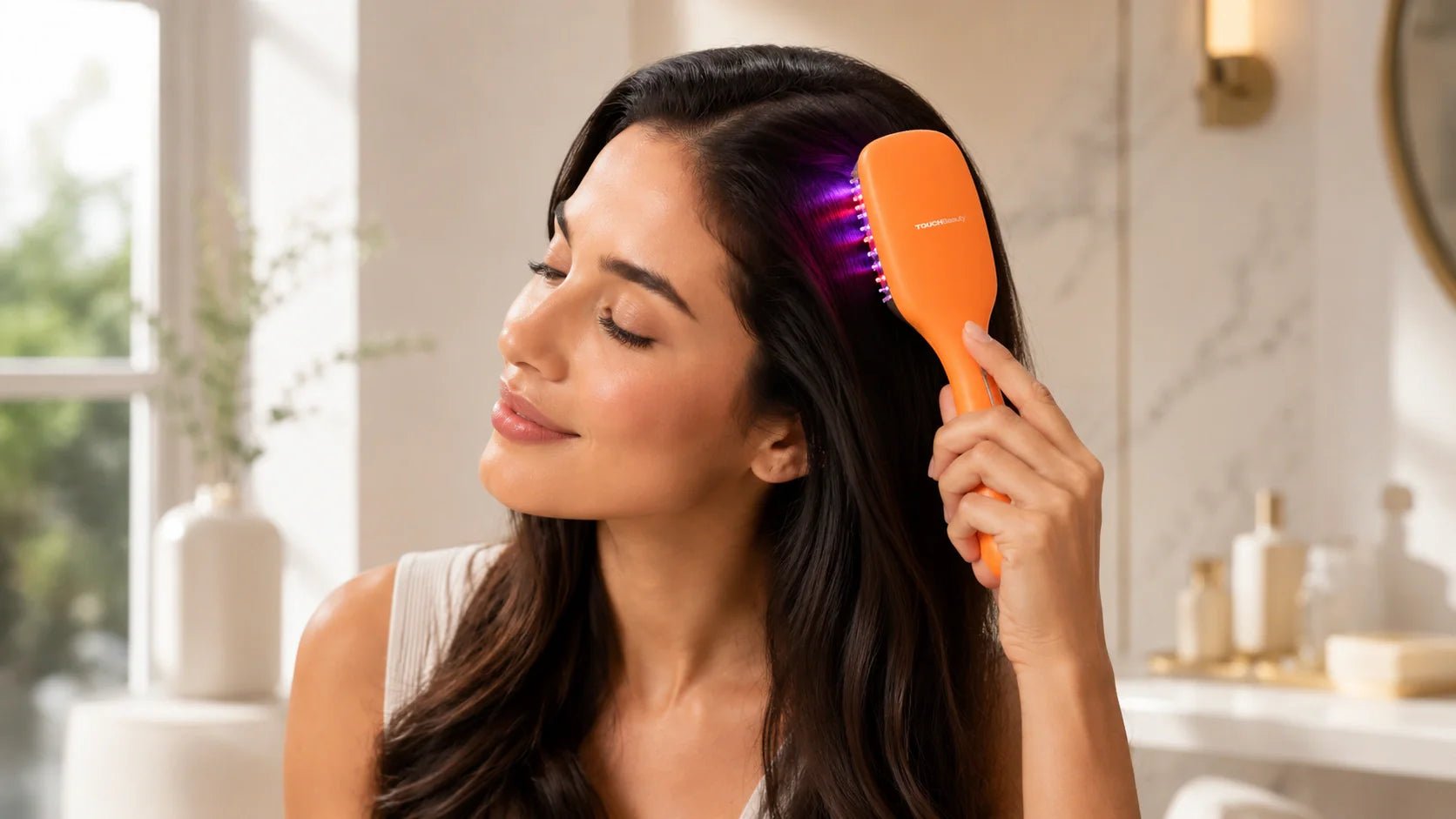
The TOUCHBeauty VITA Scalp Care Comb is designed for people who want to upgrade daily brushing into a smarter scalp care ritual. It combines multiple beauty technologies in one tool, including negative ions, sonic vibration, EMS, LED light care, and laser comb care.
For oily roots, VITA helps turn brushing into a 5-minute scalp care routine — not just a styling step.

How TOUCHBeauty VITA Helps Upgrade Oily Scalp Care
If your scalp feels oily, flat, or heavy between wash days, VITA can fit naturally into your routine. Instead of only brushing the surface of your hair, you can slowly comb through the scalp area and focus on the roots.
VITA is especially useful for people who want:
- Fresher-feeling roots
- Smoother-looking hair
- A more relaxing scalp care routine
- A beauty-tech upgrade from a regular brush
- A simple 5-minute routine at home
The VITA design makes it easy to use on clean, dry hair. You can choose a mode based on your scalp needs and slowly move the comb through the root area.
If you are comparing tools, a regular brush mainly detangles. A scalp massager mainly helps with comfort. A multi-function scalp care comb combines brushing, scalp contact, and beauty technology in one step.
To learn more about the technology side, read our guide: Do Laser Hair Growth Combs Work?

A Simple 5-Minute Routine for Oily Roots
Here is an easy routine you can follow at home:
Morning or evening routine:
- Start with clean, dry hair.
- Part your hair into small sections near the roots.
- Choose your preferred VITA mode.
- Slowly comb through the scalp area for about 5 minutes.
- Focus on oily, flat, or heavy-feeling root areas.
- Avoid adding heavy oils or creams near the scalp afterward.
This routine is especially helpful if you want a scalp care device for oily roots, a beauty tool for flat hair, or a daily scalp care comb for fresher-looking hair.
Consistency matters more than intensity. A gentle routine you can repeat is better than an aggressive routine you cannot maintain.
What to Avoid If Your Scalp Gets Oily Fast
If your roots become greasy quickly, try avoiding these common mistakes:
Do not overwash aggressively.
Washing too often with harsh shampoo can leave your scalp feeling stripped.
Do not apply hair oil to the scalp unless needed.
Hair oils may be useful for dry ends, but they can make oily roots look heavier.
Do not rely only on dry shampoo.
Dry shampoo is a temporary styling solution, not a complete scalp care routine.
Do not ignore buildup.
If your roots feel waxy or heavy, your scalp may need a better cleansing and brushing routine.
Do not use every product at once.
Keep your routine simple. A cleanser, lightweight conditioner, and scalp care tool may be enough.

Best Ingredients and Products for Oily Scalp
When choosing hair products for an oily scalp, look for lightweight formulas. Clarifying shampoos can be helpful occasionally, but they should not always replace your regular shampoo.
Good routine choices may include:
- Lightweight shampoo
- Scalp-focused cleanser
- Lightweight conditioner for ends only
- Occasional clarifying wash
- Scalp care device
- Minimal styling product near the roots
The goal is to avoid making the scalp feel overloaded. For many people, less product and better scalp habits work better than adding more layers.

When Should You Worry About an Oily Scalp?
Most oily scalp concerns are related to routine, hair type, lifestyle, or weather. However, if your oily scalp comes with intense itching, redness, flakes, discomfort, or sudden major changes, it may be worth speaking with a dermatologist or healthcare professional.
This article is for beauty and daily care education. It is not a medical diagnosis.
Final Takeaway
If your scalp gets oily fast, your hair is not necessarily dirty — your scalp may simply need a better routine. Focus on gentle cleansing, lighter product placement, less buildup, and consistent scalp care.
For a simple beauty-tech upgrade, the TOUCHBeauty VITA Scalp Care Comb helps turn daily brushing into a more targeted at-home ritual for fresher-feeling roots, smoother-looking hair, and a more refreshed scalp experience.
Start with 5 minutes. Keep it simple. Let your routine begin at the roots.
FAQ
Why does my scalp get oily after one day?
Your scalp naturally produces oil, and fine hair, product buildup, sweat, humidity, or heavy conditioners can make roots look greasy faster.
How do I stop my roots from getting greasy so quickly?
Focus on gentle scalp cleansing, keep conditioner away from the roots, reduce heavy styling products, and build a consistent scalp care routine.
Should I wash oily hair every day?
Some people may need frequent washing, but overwashing with harsh formulas can make the scalp feel unbalanced. Try a gentle routine and adjust based on your hair type.
Can a scalp care comb help oily roots?
A scalp care comb can help you create a more targeted routine around the roots. VITA combines brushing with beauty technologies such as sonic vibration, LED, EMS, negative ions, and laser comb care.
What is the best at-home fix for oily scalp?
The best at-home fix is a consistent routine: cleanse the scalp properly, avoid heavy products near the roots, refresh the scalp between wash days, and use a scalp-focused tool like VITA.

Leave a comment
All comments are moderated before being published.
This site is protected by hCaptcha and the hCaptcha Privacy Policy and Terms of Service apply.