



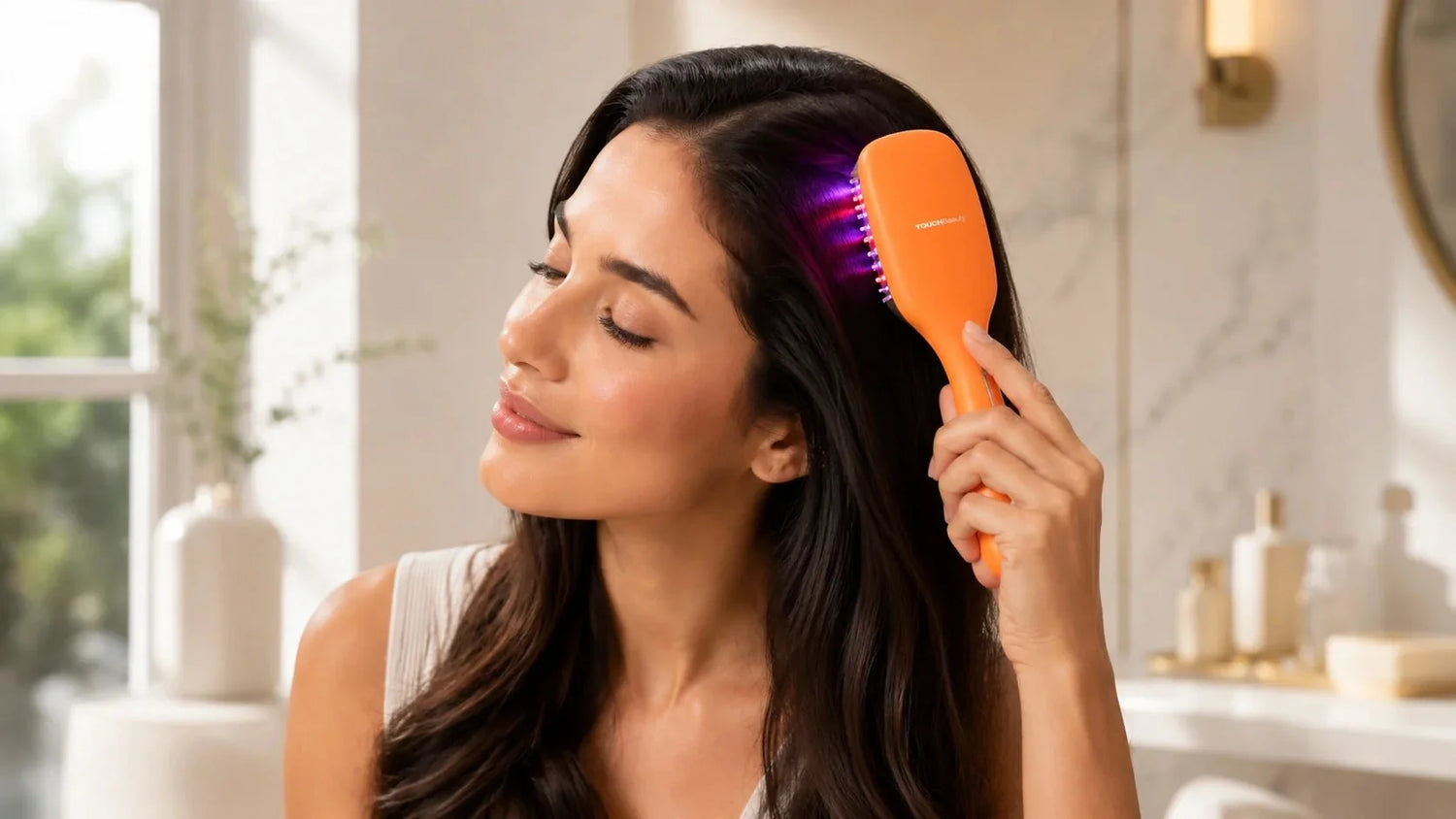
A thoughtful scalp care routine at home does not need to be complicated. The most useful routine is one that matches your scalp type, keeps cleansing comfortable, and uses brushing or beauty tools for the purpose they are designed for.
Your scalp is skin. It naturally produces oil, sheds skin cells, and responds to products, weather, and everyday habits. Oily roots, product buildup, frizz, and a flat-looking style can have different causes, so the best approach is to understand the concern before adding another product or device.
In this guide, we’ll walk through a practical scalp care routine, compare common tools, explain the technologies found in modern scalp care devices, and show how the TOUCHBeauty VITA Scalp Care Comb (TB-2343) can fit into an at-home routine.

Why Is Scalp Care Important?
The scalp supports the hair follicles and forms part of the skin barrier. Everyday care is therefore about keeping the scalp clean and comfortable—not stripping away all natural oil or trying to force a particular hair-growth outcome.
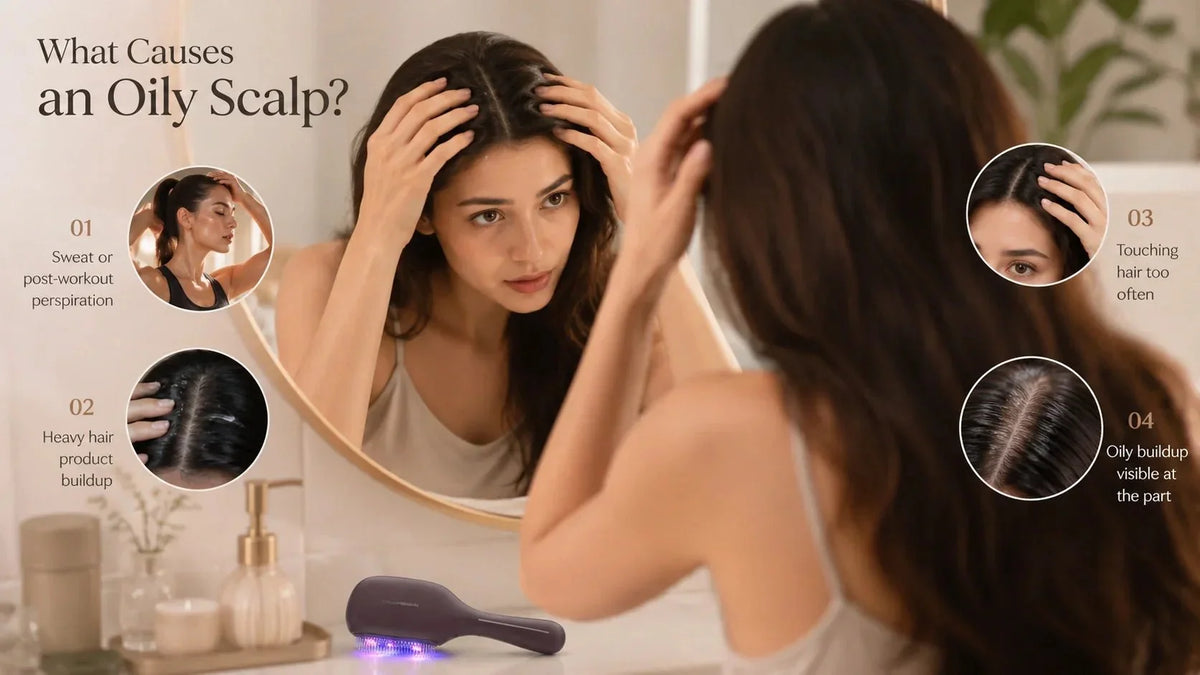
Sebum helps protect the skin and hair. However, excess oil, sweat, styling residue, and dead skin cells can contribute to roots that feel heavy or look greasy. Hair texture also affects how visible oil becomes: fine or straight hair may show oil sooner than thicker or curlier hair.
A balanced scalp care routine usually focuses on three practical goals:
- Cleanliness and comfort: cleanse at a frequency that suits your scalp and remove product residue thoroughly.
- Gentle handling: detangle without unnecessary pulling, scratching, or friction.
- Hair manageability: choose suitable conditioning and styling products to help manage dryness, frizz, and static along the hair lengths.
Scalp care is not a one-size-fits-all routine. Adjust it to your oil level, hair texture, styling habits, and any symptoms you may be experiencing.
Common Scalp and Hair Concerns
Different concerns can look similar at first, but they may need different care approaches. Start by identifying what you notice most often.

1. Oily Scalp and Greasy Roots
Your sebaceous glands naturally produce sebum. Genetics, hormones, hair texture, and environmental conditions can influence how oily your roots appear. A practical routine may include washing as often as your scalp needs, using a suitable shampoo, and keeping heavier conditioners mainly on the mid-lengths and ends.
Read our guide to why your scalp gets oily so fast for more detailed advice about greasy roots and product buildup.
2. Flat or Limp Hair
Fine hair, excess oil, and styling residue can weigh down the roots. Try lightweight styling products and avoid applying rich conditioners directly to the scalp if they make your hair feel heavy. Gentle detangling can help you style without pulling at the roots.
3. Frizz and Static
Frizz can be influenced by hair damage, dryness, humidity, and friction. Static is an electrical effect that can make individual strands repel one another. Conditioning products and gentle handling may help improve the appearance and feel of the hair. Some hair tools also use negative-ion technology as a styling feature intended to help manage static and flyaways.
4. Product Buildup and Scalp Discomfort
Dry shampoo, styling sprays, oils, sweat, and natural sebum can accumulate between washes. Thorough cleansing and occasional use of a suitable clarifying shampoo may help remove residue. Persistent itching, redness, scaling, soreness, or unusual shedding should not be treated as ordinary product buildup without further assessment.
How to Build a Scalp Care Routine at Home
A manageable scalp care routine at home can be built around five steps. You do not need to use every tool or treatment every day; consistency and suitability are more important than complexity.
Step 1: Cleanse According to Your Scalp Needs
Choose a shampoo that suits your scalp and hair type. People with oily scalps may prefer more frequent washing, while people with dry or textured hair may need a different schedule. Massage shampoo gently into the scalp with your fingertips, rinse thoroughly, and avoid aggressive scratching.
Step 2: Condition the Hair Where It Needs It
Apply conditioner mainly to the mid-lengths and ends if your roots become oily easily. If your hair is dry or textured, choose a formula that provides enough conditioning without leaving unwanted residue. Rinse according to the product directions.
Step 3: Detangle and Brush Gently
Use a suitable brush or wide-tooth comb and work through tangles carefully, starting near the ends and moving upward. Avoid forceful brushing, especially when hair is wet and more vulnerable to stretching and breakage. A brush helps with grooming; it does not replace cleansing.

Step 4: Add Gentle Scalp Massage if You Enjoy It
Scalp massage can be a relaxing part of a personal-care routine. Use your fingertips or a suitable scalp massager with comfortable pressure. Avoid scratching, pulling, or repeatedly rubbing one area.
Massage should be understood as a comfort and grooming activity. It is not established as a reliable way to reduce sebum production or treat hair loss. For more on the evidence and practical use of massage tools, read Is a Scalp Massager Good for You?.
Step 5: Choose Scalp Care Tools Carefully
Modern scalp care devices may combine brushing with features such as sonic vibration, EMS electrical stimulation, negative ions, LED light, or low-level laser technology. These functions are not interchangeable, and the evidence for one technology cannot automatically be applied to another device.
Before choosing a device, check its exact functions, model specifications, usage instructions, cleaning requirements, and any safety precautions. Do not assume that a device can replace shampoo, diagnose a scalp condition, or guarantee hair growth.
Step 6: Keep the Routine Consistent and Review How Your Scalp Responds
Give a simple routine time to become a habit. Pay attention to whether your scalp feels comfortable, whether roots become oily sooner or later, and whether products leave residue. Change one part of the routine at a time so you can better understand what works for you.

Scalp Care Tools: Which One Should You Choose?
Different tools are designed for different jobs. The right choice depends on whether you mainly need detangling, manual massage, powered massage, or a device that combines several beauty technologies.
| Tool | Main function | May suit |
|---|---|---|
| Regular hairbrush | Detangling and styling | Everyday grooming |
| Manual scalp massager | Hand-controlled massage | People who prefer a simple massage tool |
| Electric scalp massager | Powered movement or vibration | People who prefer an automated massage sensation |
| Multifunctional scalp care comb | Brushing combined with model-specific technologies | People seeking several grooming and beauty-care features in one tool |
For a deeper comparison of massage tools, see our scalp massager guide.
Understanding Modern Scalp Care Technologies
When comparing electronic scalp care devices, it helps to understand what each feature is designed to do—and what it does not establish.
Negative-Ion Technology
Negative-ion technology is used in some hair styling tools and is intended to help manage static and flyaways. The visible styling result can vary with hair condition, humidity, and the way the device is used. It should not be described as repairing damaged hair or changing hair texture permanently.
Sonic Vibration
Sonic vibration creates a repeated mechanical sensation during use. In a scalp care comb, it can add a massage-like feel to brushing. It does not, by itself, establish a medical effect on scalp oil production or hair growth.
EMS Electrical Stimulation
EMS uses electrical stimulation delivered through conductive contact points. Its application depends on the design and parameters of the individual device. Do not assume that research on one electrical-stimulation device proves the same outcome for another. Learn more in our EMS scalp therapy guide.
Red and Blue LED Light
LED devices use light-emitting diodes. Red and blue light are different wavelengths and should not be treated as the same technology. The intended use and evidence depend on the device's exact specifications, light output, treatment schedule, and regulatory status.
Low-Level Laser Technology
Low-level laser devices use laser light under specified conditions. They are not the same as LED devices, even when the wavelengths are similar. Research and regulatory indications apply to specific devices and protocols, not to every product marketed with the term “laser.” Read Do Laser Hair Growth Combs Work? for more detail.
How TOUCHBeauty VITA Fits Into an At-Home Scalp Care Routine
The TOUCHBeauty VITA Scalp Care Comb (TB-2343) combines brushing with several device-specific technologies in one rechargeable tool. Its feature set includes negative ions, sonic vibration, EMS electrical stimulation, red and blue LED light, and low-level laser technology.
VITA is designed to complement regular hair cleansing and grooming. It is not a shampoo replacement, and the presence of an “OIL-CONTROL+” mode should not be interpreted as a guarantee that the device will reduce natural sebum production.
Four VITA Care Modes
| Mode | Mode description | Routine context |
|---|---|---|
| MASSAGE+ | Sonic vibration and negative-ion care | A massage-focused brushing experience |
| OIL-CONTROL+ | Blue light, EMS and vibration | A scalp-focused device mode for users concerned about oily roots |
| REVITALIZE+ | Red light, low-level laser technology and EMS | A light-based and electrical-stimulation care mode |
| ALL-IN-ONE | Combines the device's main care functions | A combined device routine according to the manual |
What Does the SGS Evaluation Tell Us?
TOUCHBeauty's VITA Multi-Function Hair Care Comb was evaluated in an SGS 56-day human-use assessment (Report No. GZCPCH24005312-01_EN, dated November 28, 2024). The evaluation involved 32 participants with valid results and assessed changes including scalp sebum, local hair density, local hair count, and hair counts collected during a standardised combing assessment.
At Day 56, the report recorded a 30.65% decrease in measured scalp sebum compared with baseline within the tested routine. The protocol used the VITA ALL-IN-ONE mode once daily for approximately five minutes, at the recommended third intensity level, in combination with a collagen moisturising scalp essence.
This distinction matters: the report evaluates a combined routine, not the isolated effect of the OIL-CONTROL+ mode or the comb used without the essence. The results should not be interpreted as a guaranteed outcome for every user or as proof that VITA treats a medical scalp condition. The full report's methods and limitations should be consulted when interpreting the findings.
How to Use VITA in Your Routine
- Begin with clean, completely dry hair and scalp.
- Select a mode and intensity according to the user manual and your comfort.
- Part the hair if needed so the comb teeth can make suitable contact with the scalp.
- Glide the comb gently; do not press hard, scratch, or repeatedly work over an irritated area.
- Follow the recommended session duration and frequency for the selected mode. The product routine describes sessions of approximately five minutes.
- Remove and clean the detachable comb head as instructed. Keep the electronic body dry and do not immerse it in water.
Stop use if you experience discomfort or irritation. Review all device precautions before use, particularly if you have a scalp condition or a medical reason to avoid electrical stimulation or light-based devices.

Bring Multiple Scalp Care Features Into One Routine
Explore the TOUCHBeauty VITA Scalp Care Comb, featuring four care modes and a combination of grooming and beauty technologies.
Who May Enjoy an At-Home Scalp Care Routine?
A consistent routine can be useful for people who want to pay more attention to everyday scalp and hair grooming, including those who:
- Experience oily roots between wash days and want to refine their cleansing habits.
- Have fine or flat-looking hair and prefer lightweight products.
- Deal with frizz or static and want to improve hair manageability.
- Enjoy gentle scalp massage as part of their self-care routine.
- Are interested in multifunctional beauty devices and understand their specific features and limitations.
- Prefer a practical routine they can maintain at home.
If you have persistent itching, redness, scaling, soreness, painful bumps, sudden shedding, or noticeable hair loss, seek advice from a qualified healthcare professional. A cosmetic device should not replace diagnosis or treatment.
Explore More Scalp Care Guides
Continue learning about individual scalp concerns and the technologies used in modern hair care:
- Why Does My Scalp Get Oily So Fast? — common causes of greasy roots and practical cleansing advice.
- Is a Scalp Massager Good for You? — scalp massage tools, use, and limitations.
- EMS Scalp Therapy — how electrical stimulation works and what research can tell us.
- Do Laser Hair Growth Combs Work? — laser technology, research, and buying considerations.
Frequently Asked Questions About Scalp Care
1. How often should I follow a scalp care routine?
It depends on your scalp type, hair texture, activity level, and products. Cleanse as often as needed to keep your scalp comfortable. Use specialised devices only as directed by their manufacturers.
2. What is a good scalp care routine for oily hair?
Use a shampoo suited to your scalp, wash at a frequency that works for you, rinse thoroughly, and keep heavy conditioner mainly on the lengths and ends. Reduce styling-product buildup if your roots feel coated.
3. Does scalp massage make hair grow?
Scalp massage can feel relaxing, but it should not be presented as a proven or guaranteed hair-growth treatment. Hair thinning and hair loss have many possible causes and may need professional assessment.
4. What is the difference between a scalp massager and a scalp care comb?
A manual scalp massager mainly provides hand-controlled massage. A multifunctional scalp care comb combines brushing with additional model-specific features, which may include vibration, EMS, light technology, or negative ions.
5. Can I use VITA on wet hair?
TOUCHBeauty VITA is intended for use on clean, completely dry hair and scalp. Follow the instructions supplied with your exact device.
6. Can VITA replace shampoo or scalp treatment?
No. VITA is a beauty device that complements grooming and scalp care. It does not cleanse away sebum like shampoo and should not replace medical treatment for scalp conditions or hair loss.
7. Does the SGS result mean VITA will reduce everyone's scalp oil by 30.65%?
No. The 30.65% figure is the Day 56 change in measured scalp sebum within the specific SGS-evaluated routine, which included the VITA device and a collagen moisturising scalp essence. It is not a guaranteed individual result or an isolated measurement of the comb alone.
Build a Scalp Care Routine That Works for You
A practical scalp care routine at home starts with understanding your own scalp. Gentle cleansing, suitable conditioning, careful brushing, and comfortable massage can form a simple foundation. Beauty devices may add features to that routine, but their functions and evidence should be understood individually.
Choose tools based on your needs, follow the manufacturer's instructions, and seek professional advice when symptoms persist. For a multifunctional at-home option, explore the TOUCHBeauty VITA Scalp Care Comb .


Leave a comment
This site is protected by hCaptcha and the hCaptcha Privacy Policy and Terms of Service apply.