



Is a scalp massager good for you? Yes, if you enjoy gentle scalp massage or want a tool to help distribute shampoo during washing. A scalp massager may make your hair care routine more comfortable, but it is not a proven standalone treatment for hair loss, dandruff or excessive sebum production. Choose a tool that suits your hair texture and use it without scratching or tugging.
Scalp massagers have become increasingly popular in at-home hair care. From simple silicone brushes to electric scalp massage devices with vibration and advanced beauty technologies, there are now more ways to make scalp care part of your daily routine.
But what can these tools really do? Can they help with hair growth, reduce oily roots, or improve scalp health? In this guide, we'll explore the potential benefits of scalp massage, how to use a scalp massager correctly, and what to consider when choosing the right device for your needs.
What Is a Scalp Massager?
A scalp massager is a handheld tool designed to gently massage the scalp using flexible bristles, rounded tips, or mechanical vibrations.
Unlike a traditional hairbrush, which mainly focuses on detangling and styling, a scalp massager is designed to provide direct contact with the scalp and create a more focused massage experience.
Depending on the design, scalp massagers generally fall into three categories:
- Manual scalp massagers: Usually made with silicone or flexible bristles. They are simple to use and often used during shampooing.
- Electric scalp massagers: Use powered movement or vibration to create a consistent massage experience.
- Multi-function scalp care devices: Combine scalp massage with additional technologies such as negative ions, EMS microcurrent, LED light, or low-level laser technology.
Each type offers a different experience, so the best choice depends on your hair care preferences and the features you want in your routine.
What Are the Benefits of Using a Scalp Massager?
A scalp massager is not a medical treatment or a replacement for proper hair care. However, gentle scalp massage can offer several practical benefits when used appropriately.
1. Creates a Relaxing Scalp Massage Experience
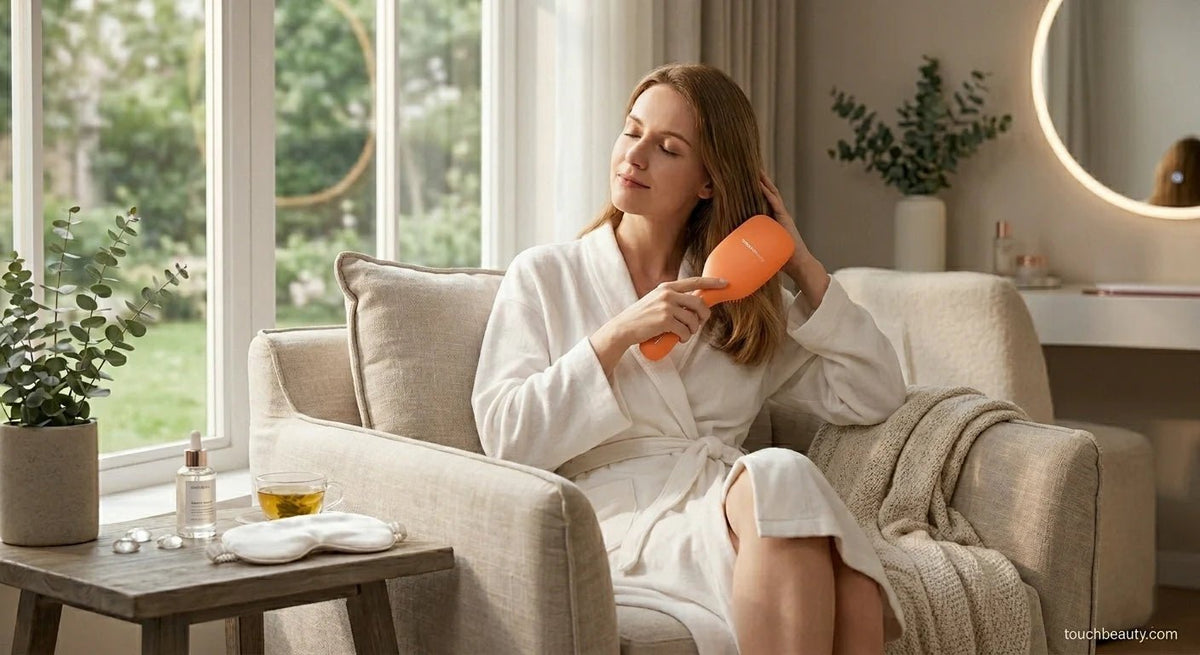
One of the most immediate benefits of using a scalp massager is relaxation.
Gentle, rhythmic movements across the scalp can create a soothing sensation and help make your hair care routine feel more like a self-care ritual.
Whether you use a manual scalp brush or an electric scalp massager, a few comfortable minutes can be a pleasant way to unwind after a busy day.
2. Helps Make Shampooing More Thorough
A manual scalp massager can help distribute shampoo across the scalp while gently loosening some surface residue and loose flakes during washing.
This can be especially useful for people who prefer using a tool rather than their fingertips when shampooing.
The American Academy of Dermatology (AAD) recommends focusing shampoo on the scalp and handling hair gently. A brush is optional; fingertips can be sufficient.
However, a scalp massager does not replace shampoo, and it should not be used to aggressively scrub away flakes or buildup. Excessive pressure can irritate the scalp.
3. Supports a More Consistent Scalp Care Routine
Many people spend time choosing shampoos, conditioners, and styling products but pay less attention to their scalp care habits.
Adding a scalp massage tool can make scalp care feel more intentional and easier to maintain.
For example, a gentle massage after cleansing can become part of a weekly routine focused on scalp comfort and relaxation.
4. May Temporarily Increase Local Blood Flow
Mechanical massage may temporarily affect local circulation, but the extent and duration vary. Research into mechanical stretching and follicle-related cell signaling is exploratory; it does not establish that increased blood flow alone restores lost hair.
However, increased circulation should not be confused with proven hair regrowth. There is currently limited clinical evidence showing that ordinary scalp massage can reliably increase hair density or prevent hair loss.
The main reason to use a scalp massager should be comfort and routine support, rather than expecting guaranteed changes in hair growth.
5. Adds a More Comfortable Hair Care Experience
Some electric scalp massagers use vibration to create a consistent massage sensation. This can make scalp care feel more convenient, particularly for people who prefer powered devices over manual brushing.
Multi-function devices may also include additional features designed to care for both the scalp and hair strands, depending on the technology used.
Does Scalp Massage Help Hair Growth?
This is one of the most frequently asked questions about scalp massagers.
The short answer is that there is not enough strong clinical evidence to conclude that scalp massage alone can reliably promote hair growth.
What a 2016 scalp massage study found
Koyama and colleagues followed nine healthy men who used a specific massage device for four minutes daily over 24 weeks. Average hair shaft thickness in the treated area increased from 0.085 mm to 0.092 mm compared with baseline.
Hair growth rate did not increase significantly. Hair count also temporarily decreased at week 12 compared with baseline. This small study in healthy men cannot establish that a massage brush reverses pattern hair loss, and its protocol was not a test of TOUCHBeauty VITA.
You can read the original research here: Standardized Scalp Massage Results in Increased Hair Thickness.
What a 2019 survey adds to the evidence
A retrospective study by English and Barazesh surveyed people interested in massage for pattern hair loss. Of 340 respondents, 327 reported trying the massage technique; 68.9% of massage participants reported stabilization or regrowth. These were self-reported outcomes, not objectively confirmed clinical results. The survey lacked a placebo group and was vulnerable to selection and recall bias. Its intensive manual massage protocol should not be copied as a device-use schedule.
Read the 2019 scalp massage survey.
| Evidence | Observation | What it cannot establish |
|---|---|---|
| 2016 device massage study | 9 healthy men; 24 weeks; shaft thickness increased from 0.085 to 0.092 mm | Reliable regrowth or faster growth |
| 2019 retrospective survey | 327 massage participants; 68.9% self-reported stabilization or regrowth | Objective efficacy or causation |
| VITA SGS evaluation (2024) | 56-day combined care routine; scalp comfort questionnaire | Effectiveness of massage alone |
It's important to understand the difference between scalp care and hair loss treatment. A scalp massager may be a relaxing addition to your routine, but it should not replace evidence-based treatments or professional advice when you're experiencing noticeable hair thinning or hair loss.
Who Can Benefit From Using a Scalp Massager?
Scalp massagers can suit different hair care preferences, but the right tool depends on your individual needs.
For People With Oily Roots
If your roots become greasy between wash days, a scalp massage brush can be a useful addition to your shampoo routine.
It may help distribute shampoo and loosen surface residue during washing. Massage alone has not been shown to reliably regulate sebum production or replace cleansing.
If you're frequently dealing with greasy roots, read our guide: Why Does My Scalp Get Oily So Fast?
For People With Fine or Flat Hair
Fine hair can become weighed down easily, making roots look flat even shortly after washing.
A scalp care routine that includes appropriate cleansing, lightweight conditioning, and gentle brushing may help hair look fresher and easier to style.
Some electric scalp care combs also include negative ion technology designed to help reduce static and improve the appearance of frizz.
For People Who Enjoy At-Home Self-Care
If you enjoy creating a relaxing beauty routine, a scalp massager can be a simple addition.
Manual tools offer a straightforward massage experience, while electric devices can provide vibration and additional care features.
For People Interested in Multi-Function Hair Care Technology
If you want more than a basic massage tool, a multi-function scalp care device may be worth exploring.
Depending on the device, features can include sonic vibration, negative ions, EMS microcurrent, LED light, and low-level laser technology.
Before choosing a device, check its actual functions, recommended usage, safety instructions, and the evidence supporting any advertised benefits.
Manual vs. Electric vs. Multi-Function Scalp Massagers
Not every scalp massager works in the same way. Understanding the differences can help you choose a tool that fits your routine.
| Feature | Manual Scalp Massager | Electric Scalp Massager | Multi-Function Scalp Comb |
|---|---|---|---|
| Operation | Hand-operated | Powered massage | Powered brushing and multiple technologies |
| Massage | Manual pressure | Motorized movement or vibration | Sonic vibration |
| Additional Features | Usually basic | Depends on model | May include EMS, LED, ions and laser |
| Best For | Simple shampoo-time massage | Convenient massage sessions | A more comprehensive at-home scalp and hair care routine |
If you only want a simple massage while shampooing, a manual scalp brush may be enough. If you enjoy powered massage, an electric tool may suit you better.
If you're interested in combining scalp massage with additional beauty technologies, a multi-function scalp care comb offers a different approach.
Which tool is worth buying for your routine?
| Your priority | Practical choice | What to check |
|---|---|---|
| Shampoo-time massage | Manual silicone shampoo brush | Flexible tips; rinseable design |
| Relaxation on dry hair | Electric scalp massager | Comfortable contact and adjustable settings |
| Brushing, static and scalp care | Multifunctional scalp comb | Mode details, evidence and safety instructions |
| Persistent flakes or hair loss | Appropriate professional care | Underlying cause rather than a more powerful brush |
How to Use a Scalp Massager Correctly
Using a scalp massager doesn't need to be complicated. The most important things are gentle pressure, suitable technique, and choosing a tool that matches your intended use.
Step 1: Choose the Right Scalp Massager
Consider whether you prefer a manual or electric tool. Look for comfortable contact points, easy cleaning, and a design that works with your hair texture.
Step 2: Follow the Recommended Hair Care Method
Manual silicone scalp brushes are commonly used with shampoo during washing. Electric scalp care devices may have different requirements, including dry-hair-only operation.
Always check the manufacturer's instructions before using a device with water, shampoo, or hair care products.
On wash days, a water-compatible manual brush may be used with shampoo and then rinsed. For a dry electronic comb, finish washing and drying first. Avoid dragging a brush through tightly curled hair or around extensions; section the hair and use a suitable detangling method before massage.
Step 3: Apply Gentle, Controlled Movements
Move the tool slowly across the scalp without scratching, pulling, or pressing too hard.
Work in small sections and avoid repeatedly rubbing the same area.
Step 4: Keep Your Scalp Massager Clean
Remove loose hair and residue after use. If the device has detachable parts, clean them according to the manufacturer's instructions and allow them to dry completely before reassembly.
Step 5: Use It Consistently, Not Aggressively
More frequent or stronger massage does not necessarily mean better results.
Follow the recommended usage frequency for your particular tool and reduce use if you notice discomfort or irritation.
When Should You Avoid Scalp Massage?
Skip massage over broken skin, open wounds, painful bumps, active irritation or recent procedures until a healthcare professional confirms it is appropriate. Stop if you notice pain, persistent redness or increased shedding. If you have sudden or patchy hair loss or persistent scaling, seek a diagnosis rather than increasing pressure or duration.
Electronic devices may have additional restrictions. People with implanted cardiac pacemakers should not use EMS unless specifically cleared by a qualified professional. Follow the device manual, including light and eye-safety precautions. See the AAD hair loss care guidance.
What to Look for When Choosing an Electric Scalp Massager
If you're considering upgrading from a manual brush to an electric scalp massager, here are several features worth comparing.
1. Comfortable Bristle Design
Look for flexible, rounded contact points that can move through your hair without pulling excessively. The design should allow comfortable contact with the scalp.
2. Vibration Technology
Sonic vibration can provide a more consistent massage sensation without requiring repeated manual movements.
3. Additional Hair Care Technologies
Some multi-function devices combine several technologies:
- Negative ions: Designed to help reduce static and frizz for smoother-looking hair.
- EMS microcurrent: An electronic stimulation feature included in some scalp care devices.
- Red LED: A light-based technology used in certain beauty and scalp care devices.
- Blue LED: Another light-based feature included in selected scalp care products.
- Low-level laser: A light-based technology found in some specialized hair care devices.
These technologies are not interchangeable, and their inclusion in a device does not automatically establish a clinical benefit. Look for evidence and product-specific safety information before purchasing.
4. Easy Cleaning and Maintenance
Hair, oil, and everyday residue can accumulate around comb teeth and bristles. A detachable or washable comb head can make maintenance more convenient.
5. Suitable Usage and Charging Design
For an electric scalp care comb, consider battery life, charging convenience, session duration, and whether the device is designed for wet or dry use.
6. Transparent specifications and evidence
Check the actual vibration settings, contact material and water-resistance rating. If a device includes electrical or light-based functions, look for disclosed wavelengths, current characteristics, instructions and relevant model-specific testing. Be cautious of sharp contact points, decorative lights with no meaningful specifications or guaranteed hair growth within days.
Meet TOUCHBeauty VITA: More Than a Regular Scalp Massager
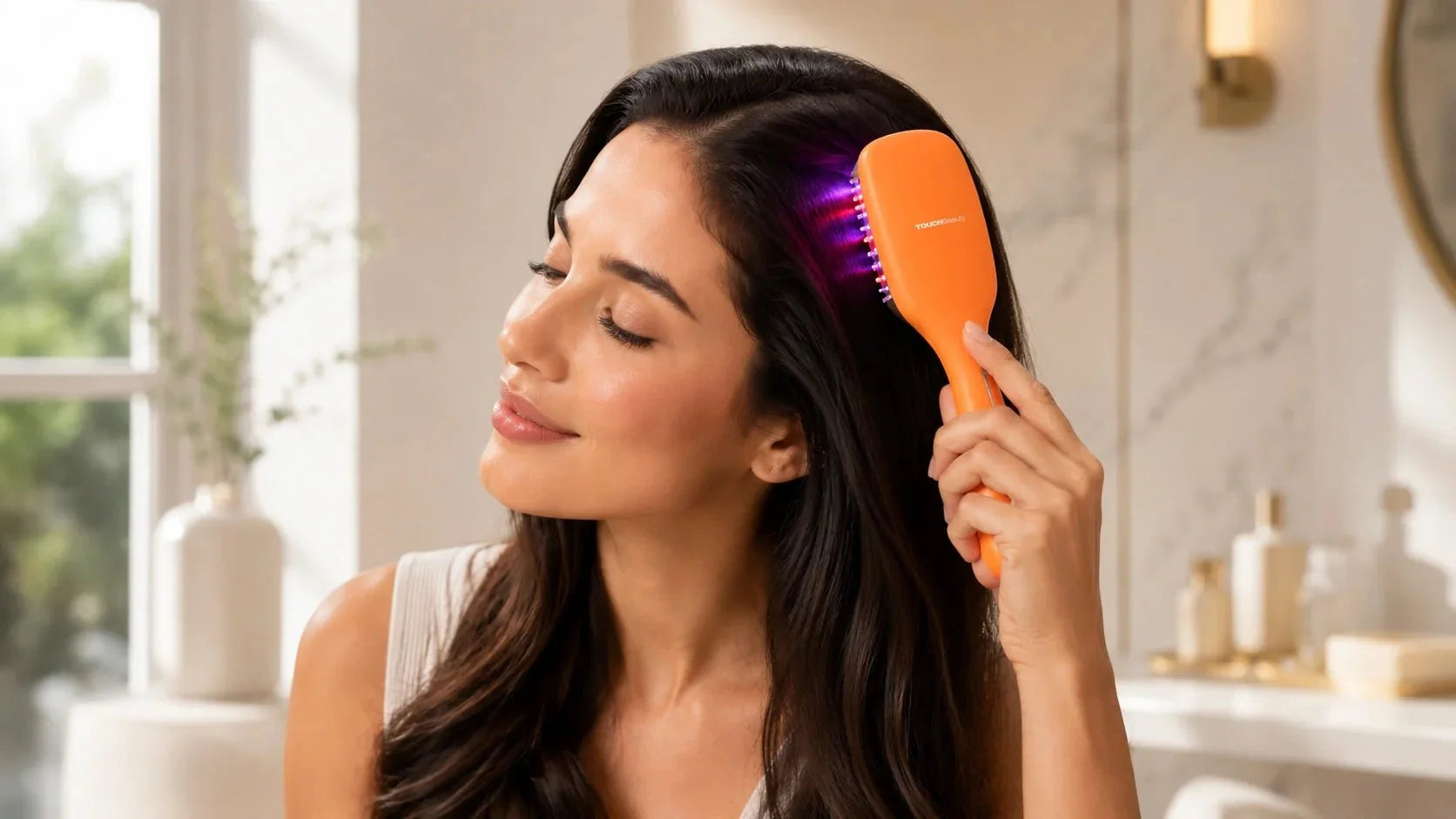
If you're looking for a device that combines scalp massage with additional hair care technologies, the TOUCHBeauty VITA Scalp Care & Hair Revitalizing Comb offers a multi-function approach to at-home scalp care.
The VITA TB-2343 is a dry-use multifunctional comb. Its declared specifications include 16,000 RPM sonic vibration, more than 20 million ions, 409 stainless-steel teeth, four care modes and three intensity levels. The ion output is a manufacturer specification, not a measured improvement in hair condition.
The six integrated technologies serve different roles:
- Sonic Vibration: Creates a relaxing scalp massage experience.
- Negative Ion Technology: Helps reduce static and frizz for smoother-looking hair.
- EMS Microcurrent: Provides an additional electronic scalp care feature.
- 460 nm blue LED: Included in OIL-CONTROL+ and ALL-IN-ONE.
- 660 nm red LED: Included in REVITALIZE+ and ALL-IN-ONE.
- 650 nm low-level light (laser): Included in REVITALIZE+ and ALL-IN-ONE.
Four Modes for Different Hair and Scalp Care Preferences
VITA offers four targeted modes, allowing you to choose the experience that fits your routine.
MASSAGE+
Combines sonic vibration and negative ion care for a relaxing massage experience and smoother-looking hair.
OIL-CONTROL+
Combines blue LED, EMS microcurrent, negative ions, and vibration for an oily-scalp-focused care routine.
REVITALIZE+
Combines red LED, low-level laser, EMS microcurrent, and negative ions for a more comprehensive scalp care experience.
ALL-IN-ONE
Combines vibration, negative ions, EMS, blue LED, red LED, and low-level laser in one complete mode.
Easy to Clean with a Detachable Magnetic Comb Head
The magnetic comb head detaches for cleaning. Its specified IPX6 water resistance applies to the head only; keep the electronic body dry. Rinse the removed head as directed and allow it to dry fully before reattaching. The brand reports up to 2–3 weeks per full charge, depending on use.
How to Use VITA at Home
- Start with clean, completely dry hair and scalp.
- Select one of the four modes according to your routine.
- Position the comb so its contact points reach the scalp.
- Slowly glide the device across the scalp for approximately five minutes.
- Clean the detachable comb head according to the product instructions.
For OIL-CONTROL+, REVITALIZE+, and ALL-IN-ONE, the recommended frequency is 3–5 times per week. MASSAGE+ can be used daily according to personal preference and the product instructions.
VITA is designed for dry hair and scalp. Do not use it as a wet shampoo brush.
Begin at a comfortable low setting. Do not apply unapproved oils or wet scalp treatments before a routine session. For detailed technology and evidence, see the VITA comb guide and EMS scalp therapy guide.
What SGS testing found about scalp comfort
In a third-party SGS evaluation of the VITA Multi-Function Hair Care Comb (report GZCPCH24005312-01_EN, November 28, 2024), 32 valid participants aged 25–52 followed a 56-day regimen. The protocol combined daily five-minute ALL-IN-ONE sessions with a collagen moisturizing scalp essence applied to thinning or shaved areas. The third intensity setting was recommended in the study.
| Participant self-assessment | Day 28 | Day 56 |
|---|---|---|
| Satisfaction with scalp soothing | 78.1% | 90.6% |
| Overall satisfaction with product use | 93.8% | 93.8% |
Source: SGS report, pages 10 and 29, Table 5-2. These are questionnaire satisfaction percentages, not objective measurements of reduced irritation or stress. The study did not isolate vibration or MASSAGE+ or compare the regimen with a separate sham or untreated group. Its daily combined-use protocol is not the standard consumer usage schedule; follow your device instructions.
If you want to explore its complete specifications, four modes, and design, visit the TOUCHBeauty VITA Scalp Care Comb product page.
Upgrade Your Scalp Care Routine
More than a regular hairbrush. Discover four care modes, six integrated technologies, and a convenient five-minute at-home routine with TOUCHBeauty VITA.
Build Your Complete At-Home Scalp Care Routine
A scalp massage can be a valuable part of your hair care routine, but effective scalp care involves more than massage alone. Gentle cleansing, consistent brushing, and choosing the right scalp care tools can help you build a more complete routine.
Explore our Complete Scalp Care Guide to learn how to care for oily roots, improve your daily brushing habits, and incorporate modern scalp care technology into your routine.
Read the Complete Scalp Care Guide →
Looking for more than a traditional scalp massager?
Discover the TOUCHBeauty VITA Scalp Care & Hair Revitalizing Comb, which combines EMS, sonic vibration, negative ions, LED light, and low-level laser technology in one multifunctional hair and scalp care device.
Frequently Asked Questions About Scalp Massagers
1. Is a scalp massager good for you?
For most people, a gentle scalp massage can be a relaxing addition to a hair care routine. It may help create a more comfortable self-care experience and assist with shampoo distribution when using an appropriate manual brush. Avoid excessive pressure or aggressive rubbing.
2. Can a scalp massager help hair grow faster?
There is limited clinical evidence supporting scalp massage as a hair growth method. One small study found an increase in hair shaft thickness after 24 weeks, but did not demonstrate a significant increase in hair growth rate. Scalp massage should not replace proven hair loss treatments.
3. Does a scalp massager help with oily hair?
A manual scalp massager may help distribute shampoo and loosen surface residue during washing. However, massage does not directly regulate sebum production. Appropriate cleansing remains important for managing oily roots.
4. Can I use a scalp massager every day?
It depends on the type of massager and its instructions. Gentle manual massage may be incorporated into regular washing routines. For electric devices, follow the recommended frequency and avoid excessive stimulation.
5. Should I use a scalp massager on wet or dry hair?
It depends on the product. Manual shampoo brushes are generally designed for use during washing, while some electric scalp care combs are designed exclusively for dry hair. Always check the manufacturer's instructions before use.
6. Is an electric scalp massager better than a manual one?
Neither is universally better. A manual scalp massager is simple and suitable for shampoo-time use. An electric scalp massager provides powered movement or vibration, while a multi-function scalp comb may offer additional technologies. Choose according to your routine and preferences.
7. How often should I clean my scalp massager?
Remove loose hair and residue after use. Clean the tool regularly according to its material and manufacturer's instructions. Detachable heads can make this process easier.
8. Does a scalp massager help with dandruff?
A suitable shampoo brush may loosen loose flakes during cleansing, but it does not treat the underlying causes of dandruff. Avoid scraping attached scales. Read our dandruff versus dry scalp guide and seek help for persistent symptoms.
9. Is scalp massage the same as EMS scalp therapy?
No. Massage uses physical movement or vibration; EMS applies electrical pulses. Their mechanisms, safety instructions and evidence differ. A device with both functions is not proof that the two produce the same outcomes.
10. How long should I use a scalp massager?
There is no universal duration. Keep manual massage brief and comfortable, and follow the exact device instructions for powered tools. VITA sessions are approximately five minutes; longer sessions are not necessarily better.
Final Thoughts: Is a Scalp Massager Worth It?
A scalp massager can be a worthwhile addition to your hair care routine if you enjoy scalp massage, want a more comfortable shampooing experience, or prefer incorporating dedicated scalp care into your weekly beauty habits.
The key is choosing the right type of tool for your needs. A manual brush is a simple option, an electric scalp massager adds powered movement, and a multi-function scalp care comb combines massage with additional beauty technologies.
If you want to go beyond basic brushing, explore the TOUCHBeauty VITA Scalp Care & Hair Revitalizing Comb and discover a more comprehensive way to care for your scalp and hair at home.
Because good hair care starts with a routine you can actually enjoy.
Research and Further Reading
- Koyama et al. (2016), Eplasty, 16:e8.
- English and Barazesh (2019), Dermatology and Therapy, 9:167–178.
- AAD: Tips for healthy hair.
- SGS-CSTC Guangzhou Branch, evaluation report GZCPCH24005312-01_EN (2024), pp. 10, 29.

Leave a comment
This site is protected by hCaptcha and the hCaptcha Privacy Policy and Terms of Service apply.