



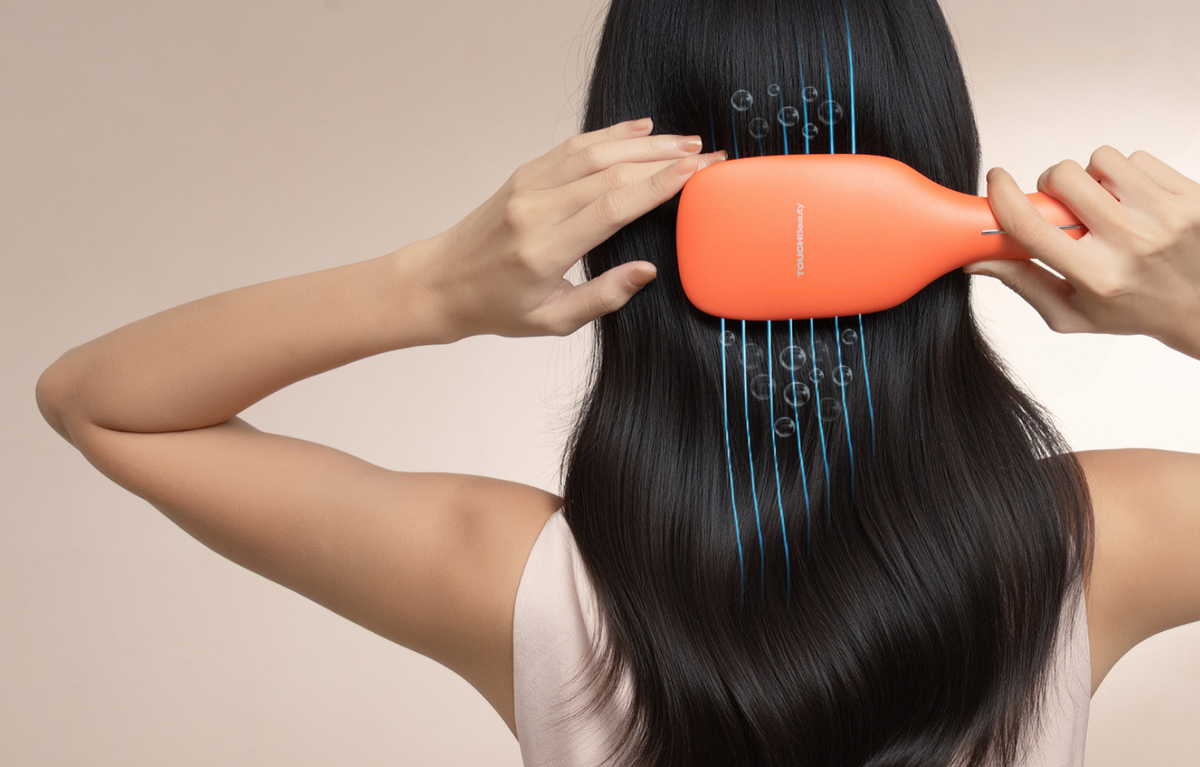
Frizzy, static-prone hair can make an otherwise polished style look unfinished. Hair may appear smooth immediately after washing, only to become puffy, rough or covered with flyaways after brushing, commuting or stepping into humid weather.
This is why ionic hair brushes have become popular as an everyday smoothing tool. But what does an ionic hair brush actually do? Can negative ions really help frizzy hair, and is an ionic brush worth adding to your routine?
The quick answer: An ionic hair brush can help reduce the appearance of static, flyaways and surface frizz by releasing negative ions while you brush. It may make dry hair look smoother, shinier and easier to manage, but it cannot permanently repair damaged hair or replace conditioner, heat protection or professional care.
This guide explains the main ionic hair brush benefits, who may benefit from one and how to use it correctly for smoother-looking hair.
What Is an Ionic Hair Brush?
An ionic hair brush is a hair-care and styling tool designed to release negative ions while passing through the hair. These ions are intended to help counteract static electricity and make the hair surface look smoother and more controlled.
A regular hair brush mainly detangles and arranges the hair. An ionic brush performs the same basic function while adding negative-ion technology to the brushing process.
Depending on the design, an ionic hair brush may be used to:
- Reduce the appearance of static
- Calm flyaways
- Make frizzy hair look smoother
- Improve everyday manageability
- Refresh second-day hair
- Create a more polished-looking finish
Some devices focus only on negative ions. More advanced tools may combine ionic care with scalp massage, vibration, EMS, LED or other scalp-focused technologies.
How Do Negative Ions Help Frizzy Hair?
Static-prone hair can carry an electrical charge that causes individual strands to repel one another. This creates flyaways and the familiar “halo” of hair that stands away from the head.
Ionic hair tools release negatively charged ions. These are designed to help counteract the static effect, allowing strands to sit closer together and appear smoother.
Negative-ion care is most relevant to the visible appearance of:
- Static
- Flyaways
- Surface frizz
- Puffiness
- Rough-looking texture
- Dullness caused by an uneven hair surface
An ionic brush does not permanently seal the hair cuticle or reverse structural damage. Its primary role is to support a smoother-looking finish during daily styling.
For a deeper explanation of the technology, read our guide to how negative ions work in hair care.
7 Main Benefits of an Ionic Hair Brush
1. Helps Reduce Static and Flyaways
Static control is one of the clearest benefits of an ionic hair brush. Static often becomes more noticeable in dry weather, air-conditioned rooms or after friction from hats, scarves and synthetic clothing.
When strands repel one another, hair can look messy even when it is clean and styled. An ionic brush may help calm this charged appearance and create a more aligned finish.
If static is mainly a seasonal problem for you, see our complete guide on how to prevent static hair in winter.
2. Makes Frizzy Hair Look Smoother
Frizz has several causes, including dryness, humidity, heat damage, chemical processing and friction. An ionic brush cannot solve every cause, but it may help smooth the visible surface of the hair.
This makes it especially useful for:
- Flyaways around the crown
- Puffiness after brushing
- Hair that looks rough between washes
- Frizz caused partly by static
- Dry-looking ends that need a smoother finish
If you need a complete routine covering washing, conditioning, drying, humidity and heat damage, start with our guide on how to stop frizzy hair.
3. Supports a Heat-Free Smoothing Routine
Many people rely on straighteners, curling irons or high-temperature blow-drying to control frizz. These tools can create a sleek result, but frequent heat exposure can contribute to dryness and breakage.
A non-heated ionic brush can provide a gentler way to smooth the appearance of hair between styling sessions. It will not straighten the hair like a flat iron, but it may help make strands look calmer and more polished without adding more heat.
If you continue to use heat tools, apply a heat-protectant product and use the lowest effective temperature.
4. Helps Hair Look Shinier
Hair reflects light more evenly when its surface looks smooth and aligned. When static and flyaways are reduced, hair may appear shinier even without adding heavy oils or silicone-rich styling products.
An ionic brush does not create artificial gloss or permanently change the condition of the hair. Instead, the visual improvement comes from helping the outer surface look more controlled.
5. Improves Everyday Manageability
Frizzy and static-prone hair can be harder to arrange because strands do not sit in the same direction. An ionic brush can make hair feel easier to manage during a quick morning routine or before leaving home.
This may be particularly helpful for people who want a polished finish without using several styling products or spending time on a full blowout.
6. Refreshes Second-Day Hair
Second-day hair can become flat at the roots while looking frizzy or static through the lengths. Friction from sleeping, clothing and daily movement may also create new flyaways.
Using an ionic brush on dry, gently detangled hair can help refresh the appearance between washes. If the ends feel dry, combine brushing with a very small amount of leave-in conditioner or lightweight serum.
Avoid applying heavy products near the scalp if your roots become oily easily.
7. Fits Easily Into an Existing Routine
An ionic brush does not require a separate salon-style process. It can replace or supplement a normal brushing step, making it easier to use consistently.
For many people, this convenience is one of the most practical ionic hair brush benefits. A tool is only useful when it fits naturally into your routine.
What an Ionic Hair Brush Can and Cannot Do
| An Ionic Hair Brush May Help | An Ionic Hair Brush Cannot |
|---|---|
| Reduce the appearance of static | Permanently repair broken hair |
| Calm flyaways and surface frizz | Replace conditioner or leave-in care |
| Create a smoother-looking finish | Change your natural curl pattern |
| Improve everyday manageability | Permanently straighten hair |
| Refresh dry second-day hair | Treat scalp disease or medical hair loss |
| Support a lower-heat styling routine | Prevent all humidity-related frizz |
Realistic expectations are important. Ionic care is best understood as a styling and surface-smoothing technology rather than a permanent treatment.
Ionic Hair Brush vs Regular Hair Brush
A regular brush detangles, separates and arranges the hair through physical brushing. An ionic brush performs these basic functions while also releasing negative ions.
| Feature | Regular Brush | Ionic Hair Brush |
|---|---|---|
| Detangles hair | Yes | Yes |
| Arranges and styles hair | Yes | Yes |
| Negative-ion technology | No | Yes |
| Designed to reduce static | Not specifically | Yes |
| Additional scalp-care functions | Usually no | Depends on the device |
If your hair is already smooth and rarely becomes static, a regular brush may be enough. If you frequently experience flyaways, static, dullness or surface frizz, an ionic brush may offer a more suitable daily styling experience.
Ionic Hair Brush vs Ionic Hair Dryer
Both tools use ionic technology, but they serve different purposes.
An ionic hair dryer is primarily used after washing. It combines airflow, heat and ionic technology to dry and style the hair.
An ionic hair brush is generally used on dry hair for smoothing, detangling, refreshing and controlling static. It can be used between washes without repeating a complete drying routine.
| Tool | Best Used For |
|---|---|
| Ionic hair dryer | Drying and styling after washing |
| Ionic hair brush | Daily smoothing, refreshing and static control |
The two tools can be used together. An ionic dryer handles the initial drying process, while an ionic brush can help maintain a smoother finish between washes.
Who Should Use an Ionic Hair Brush?
An ionic hair brush may be useful if your hair is:
- Frizzy after brushing
- Static-prone in winter or dry environments
- Covered with flyaways around the crown
- Dry-looking through the lengths
- Puffy in humid weather
- Dull or difficult to style
- Flat at the roots but frizzy at the ends
- Color-treated or chemically processed
- Weighed down easily by heavy oils and creams
People with straight, wavy, fine, thick or color-treated hair may benefit, although results will vary according to hair condition and styling habits.
If you have tightly curled or coily hair, consider how the bristle design interacts with your curl pattern. Aggressive dry brushing can disturb curl definition and cause unnecessary tension. Finger detangling, a wide-tooth comb or curl-specific tools may be more appropriate for regular detangling.
How to Use an Ionic Hair Brush for Frizzy Hair
Step 1: Start With Dry Hair
Most ionic hair brushes are intended for dry hair unless their instructions specifically state otherwise. Wet hair is more fragile and may stretch or break more easily.
Let your hair air-dry or blow-dry it first. If you need to detangle while wet, use your fingers or a wide-tooth comb with conditioner.
Step 2: Remove Major Tangles First
Do not force an ionic brush through tight knots. Start at the ends and work upward until the hair can be brushed comfortably.
For thick hair, divide it into manageable sections. This helps the brush pass through evenly without excessive pulling.
Step 3: Brush Slowly Through the Lengths
Move the brush slowly from the mid-lengths toward the ends. Avoid rushing or repeatedly brushing the same section.
After smoothing the lengths, lightly pass the brush over the top layer to help calm surface flyaways.
Step 4: Focus on Frizz-Prone Areas
Pay attention to areas where frizz and static are most visible, such as:
- The crown
- The outer layer of the hair
- The mid-lengths and ends
- Areas exposed to friction from clothing
- Sections that become puffy in humidity
Use gentle, controlled movements instead of pressing hard against the hair or scalp.
Step 5: Finish With Lightweight Care if Needed
If your ends still feel dry, apply a small amount of leave-in conditioner or lightweight hair serum. Apply it from the mid-lengths to the ends rather than directly to the scalp.
The American Academy of Dermatology’s leave-in conditioner guidance explains that leave-in products can help reduce frizz, static and flyaways while making hair easier to comb.
How Often Should You Use an Ionic Hair Brush?
Many people can use an ionic hair brush as part of their daily styling routine, provided they brush gently and follow the device instructions.
More brushing is not necessarily better. Excessive brushing can create friction, disturb curls and place unnecessary tension on fragile hair.
A practical routine may include:
- A short smoothing session in the morning
- A quick refresh before an event
- A finishing pass after hair is fully dry
- A second-day refresh between washes
If your hair begins to feel more tangled, rough or fragile, reduce the frequency and review your brushing technique.
How to Choose the Best Ionic Hair Brush
The best ionic hair brush is not necessarily the tool with the longest list of features. Choose one that fits your hair type, routine and main concerns.
Look for Effective Ionic Care
If frizz and static are your priorities, confirm that the device is designed to release negative ions during use.
Check the Bristle Design
Bristles should pass through your hair without excessive pulling. Dense or rigid bristles may not be suitable for every curl pattern or hair type.
Consider Whether You Want Scalp-Care Features
Some ionic brushes focus only on the hair lengths, while multifunctional tools may add vibration, EMS, LED or other scalp-focused modes.
Choose a simple ionic brush if your only goal is surface smoothing. Consider a multifunctional device if you also want to build a more complete scalp-care routine.
Choose a Device That Is Easy to Clean
Hair, oil and styling products can build up around the bristles. A removable or easy-to-clean brush head can make regular maintenance more convenient.
Prioritize Ease of Use
A device should be comfortable to hold and simple enough to use consistently. Cordless operation, rechargeable power and clear controls may make it easier to include in your routine.
Why Choose the TOUCHBeauty VITA Scalp Care Comb?
The TOUCHBeauty VITA Scalp Care Comb is designed for people who want more than a standard ionic brush.
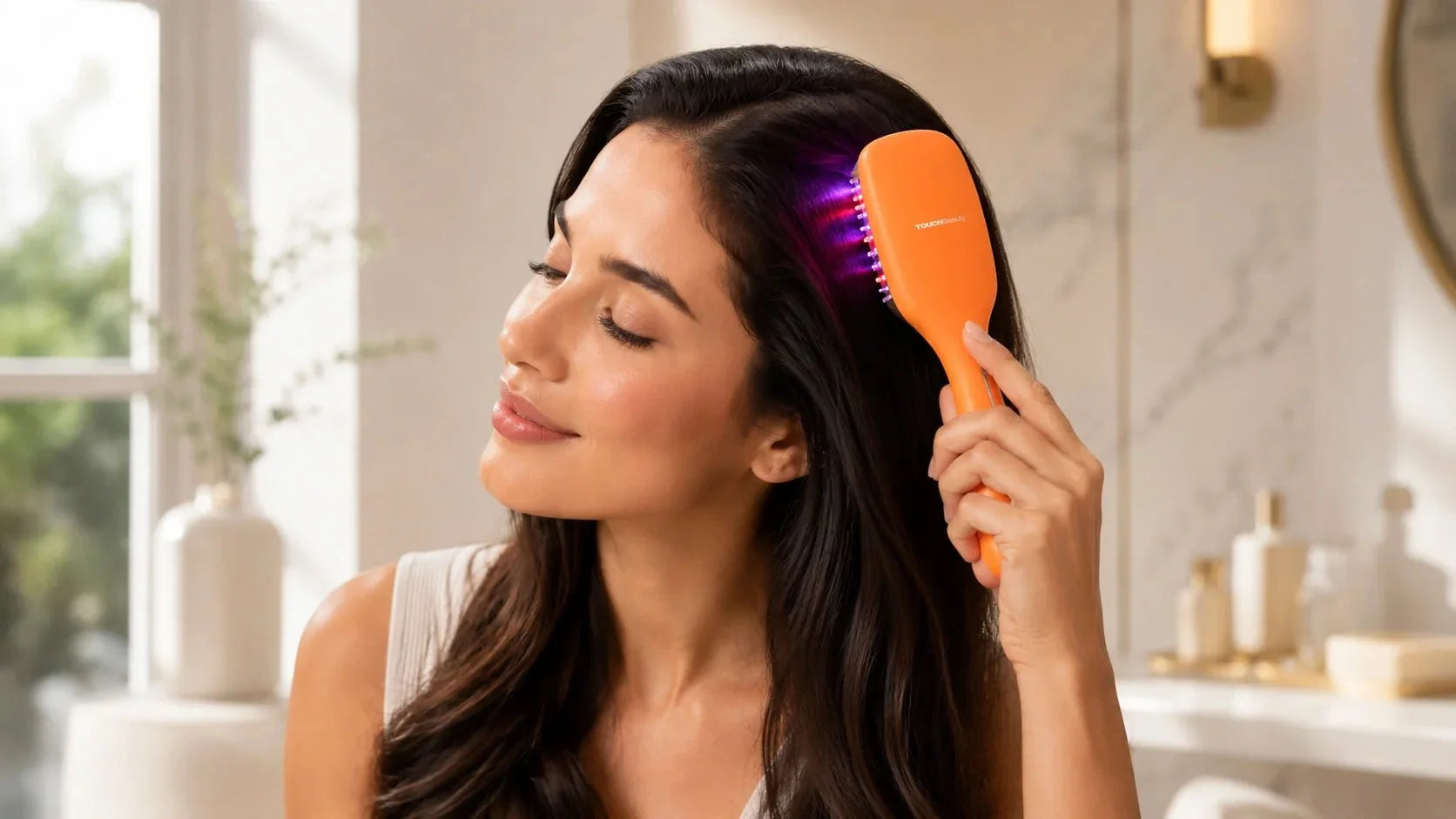
For frizzy hair, its negative-ion function is the most relevant feature. It is designed to help reduce the appearance of static and support smoother-looking, more manageable hair during brushing.
VITA also includes additional scalp-focused technologies for people who want to combine hair smoothing with a broader at-home scalp-care routine.
Key features include:
- Negative-ion care for smoother-looking hair
- Multiple hair and scalp-care modes
- Vibration massage
- EMS scalp care
- LED and low-level laser care
- Rechargeable cordless design
- Detachable magnetic comb head for easier cleaning
These additional functions are designed for a broader beauty and scalp-care experience. They should not be understood as permanent treatments for damaged hair, medical hair loss or scalp disease.
To understand how VITA fits into a broader routine, read our complete scalp care routine at home.
A Simple 5-Minute Ionic Brush Routine
- Start with clean, dry or second-day hair.
- Remove major tangles with your fingers or a wide-tooth comb.
- Divide thick hair into sections if necessary.
- Turn on the ionic hair brush according to its instructions.
- Brush slowly from the mid-lengths to the ends.
- Lightly smooth the crown and outer layer.
- Apply a small amount of leave-in care to dry ends if needed.
- Clean the brush head regularly to remove hair and buildup.
This routine should feel gentle. Stop if the brush pulls, catches or causes discomfort.
Common Ionic Hair Brush Mistakes
- Using the brush aggressively on wet hair
- Forcing it through knots
- Brushing too quickly
- Expecting permanent repair from a styling tool
- Using too much hair oil before brushing
- Ignoring the needs of curly or fragile hair
- Failing to clean the brush head
- Assuming every type of frizz is caused by static
Frequently Asked Questions
Do ionic hair brushes really work?
Ionic hair brushes may help reduce the appearance of static, flyaways and surface frizz. Results depend on your hair type, its condition, the weather and how the brush is used. An ionic brush is a smoothing tool, not a permanent repair treatment.
Is an ionic hair brush good for frizzy hair?
Yes, especially when static and flyaways contribute to the frizzy appearance. If the hair is frizzy because it is severely dry or damaged, conditioning and gentler styling are also necessary.
Can an ionic brush make hair straight?
No. A non-heated ionic brush does not permanently straighten hair or change its natural curl pattern. It may make hair look smoother and more controlled.
Can I use an ionic hair brush every day?
Many people can use one daily as long as they brush gently and follow the product instructions. Excessive or aggressive brushing may create friction and breakage.
Should I use an ionic brush on wet or dry hair?
Most ionic hair brushes are best used on dry hair unless the manufacturer states otherwise. Wet hair is more fragile, so use a wide-tooth comb or your fingers for wet detangling.
Does an ionic brush replace conditioner?
No. An ionic brush supports styling and static control, while conditioner provides moisture, slip and detangling support. The two perform different roles.
Can an ionic brush help humidity-related frizz?
It may help smooth the appearance of humidity-related frizz, but it cannot completely block moisture from interacting with porous hair. Combine it with conditioner, leave-in care and an anti-humidity product when needed.
Is an ionic brush suitable for color-treated hair?
It may be useful for color-treated hair because it does not require high heat to provide a smoothing effect. However, chemically treated hair can be fragile, so brush slowly and maintain a moisture-focused routine.
What is the difference between an ionic brush and a regular brush?
A regular brush detangles and arranges the hair. An ionic brush performs these functions while releasing negative ions intended to help reduce static and improve the appearance of frizz.
What is the best ionic hair brush for frizzy hair?
Look for a brush with negative-ion technology, gentle bristles, comfortable handling and an easy-to-clean design. If you also want scalp-focused features, consider a multifunctional device such as the TOUCHBeauty VITA Scalp Care Comb.
Final Verdict: Is an Ionic Hair Brush Worth It?
An ionic hair brush may be worth adding to your routine if static, flyaways and surface frizz make your hair difficult to manage. It provides a convenient smoothing step without requiring another high-heat styling session.
However, realistic expectations matter. An ionic brush cannot permanently repair damaged hair, replace conditioner or eliminate every form of frizz. The best results come from combining ionic brushing with proper conditioning, gentle drying, lower heat and products suited to your hair type.
If you want a multifunctional tool for smoother-looking hair and a more complete scalp-care experience, explore the TOUCHBeauty VITA Scalp Care Comb.
For a complete routine covering dryness, humidity, heat, washing and overnight friction, continue with our guide on how to stop frizzy hair.


Leave a comment
This site is protected by hCaptcha and the hCaptcha Privacy Policy and Terms of Service apply.